



Digital discovery has fundamentally changed. Audiences no longer rely on a single search engine to evaluate products, services, or ideas. Instead, they research across multiple platforms such as search engines, social networks, video platforms, online communities, review sites, and AI driven tools. Research journeys are now distributed, non linear, and risk reducing by design.
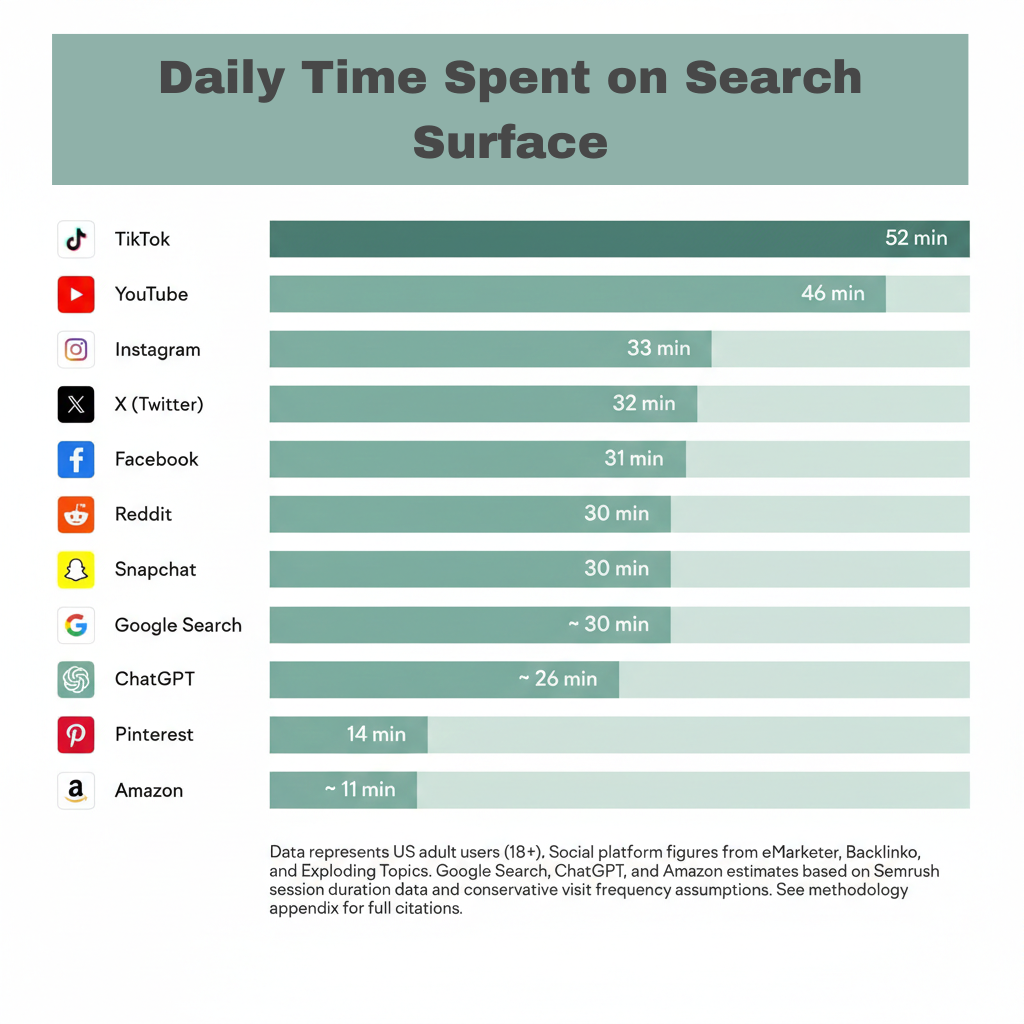
For marketers, this shift requires more than incremental SEO improvements. It demands a broader operating model called Search Everywhere Optimization. This is the discipline of building structured visibility across every platform where your audience searches and evaluates decisions.
This is not about being present everywhere without direction. It is about building systems that allow brands to show up consistently, credibly, and strategically across discovery surfaces.
Below are six principles that define a professional Search Everywhere Optimization strategy for 2026.
1. Start With Audience Behavior, Not Platform Trends
Platform selection should be driven by audience behavior, not industry momentum. Many teams choose channels first and attempt to adapt messaging afterward. This often leads to misaligned content and wasted effort.
Effective Search Everywhere strategies begin with qualitative audience insight. Interview recent customers and map their research journey. Ask how they discovered your brand, what sources they consulted, and which platforms influenced their confidence before purchase.
Patterns typically emerge quickly:
- Community discussions for validation
- Video content for comparisons
- Social platforms for peer signals
- Search engines for verification
- Review platforms for risk reduction
This behavioral mapping produces a platform priority model grounded in reality rather than assumption. Competitive and tool based data can support the process, but direct customer insight should lead it.
2. Build Intent Pillars Instead of Isolated Keywords
Keyword research remains valuable, but it is no longer sufficient as a standalone planning method. Modern discovery requires intent pillar mapping, which clusters content around the underlying questions and decisions behind search behavior.
An intent pillar represents the broader problem a user is trying to solve, not merely the phrase they type. For each high value keyword, expand outward:
- What questions sit behind this term
- What risks the user is trying to reduce
- What comparisons they are making
- What decisions they are preparing for
This approach produces multi format content ecosystems rather than isolated pages. Each pillar can support articles, videos, creator collaborations, social explainers, and community participation that reinforce the same core intent across platforms.
Intent pillars create coherence across distributed content efforts and prevent fragmentation.
3. Use Branded Search Growth as a Primary Success Signal
Channel metrics such as impressions, engagement, and follower growth often create misleading confidence. They measure activity, not preference.
A more reliable performance indicator is branded search behavior. This occurs when users actively search for your company name, product, or brand comparisons. This behavior signals movement from general awareness to specific interest.
Search Everywhere Optimization increases the likelihood of this transition by creating repeated exposure across platforms. When users encounter your brand in multiple trusted environments, recall and preference strengthen before conversion occurs.
Branded search growth should be tracked monthly and treated as a directional north star metric. Attribution across distributed journeys will remain imperfect, but brand seeking behavior is a durable proxy for strategic impact.
4. Scale Through Creator Partnerships
The volume and platform diversity required for Search Everywhere visibility exceed the production capacity of most internal teams. Attempting to scale only with in house resources often leads to output fatigue or declining quality.
Creator partnerships provide a scalable alternative. Subject matter creators bring platform native communication style, established audience trust, relatability, credibility, and format fluency.
Brands should supply structured strategic briefs that include intent focus, required coverage points, and success criteria, while allowing creators to execute in their own voice. This balance preserves authenticity while maintaining strategic alignment.
Quality at scale is achieved not by centralizing production, but by systematizing collaboration.
5. Enter Emerging Conversations Before Volume Peaks
Traditional SEO strategies usually wait for measurable search demand before investing in content. By that time, authority positions are often already occupied.
Search Everywhere Optimization favors earlier entry by identifying emerging conversations through social signals, creator activity, and community discussions before search volume matures.
Early participation allows brands to establish topical authority while the conversation is still forming. When search demand later increases, the brand is already recognized as a reference source across platforms.
This early authority is especially valuable in AI mediated discovery environments, where multi source presence influences citation likelihood. Authority built ahead of demand compounds more effectively than authority built in response to it.
6. Position the Strategy as an Operating Model, Not a Campaign
Search Everywhere Optimization requires cross functional coordination. SEO, social, video, creator, and brand teams must align around shared intent pillars and discovery goals. This often challenges traditional channel silos and budget structures.
Resistance is common when the strategy is framed as a short term experiment. It is more durable when framed as an operating model that reflects changing discovery behavior.
The business case should emphasize:
- Distributed discovery realities
- AI search and zero click environments
- Brand resilience across platforms
- Branded search growth indicators
- Long term visibility compounding
Operating models receive sustained support. Campaigns compete for short term validation.
Conclusion
Search behavior is now distributed across platforms, formats, and technologies. Audiences validate decisions through repetition, comparison, and cross source confirmation. Brands that remain visible in only one discovery channel risk being absent during critical evaluation moments.
Search Everywhere Optimization responds to this reality with structure rather than sprawl. It begins with audience insight, organizes content around intent, measures brand seeking behavior, scales through creators, enters emerging conversations early, and aligns teams around a unified visibility model.
The objective is not omnipresence. It is intentional presence where curiosity occurs, consistently, credibly, and at scale.