

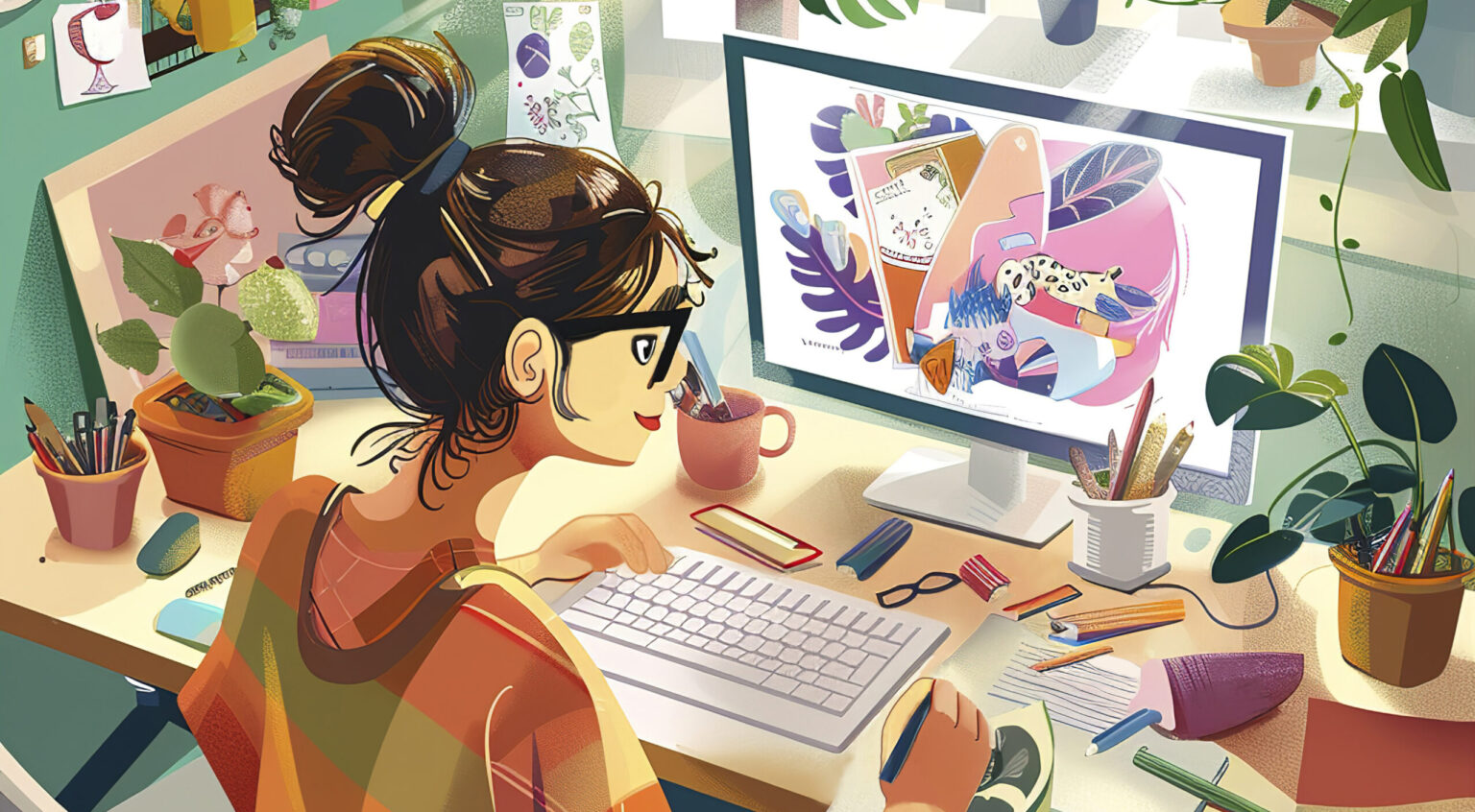

2026 marks a noticeable shift in graphic design. After several years dominated by hyper polished digital visuals and fast generative outputs, the design industry is moving toward work that feels more human, tactile, and emotionally grounded. Technology is still central, but it is no longer the headline. Craft, intention, and sensory experience are becoming the new markers of quality.
Design is not getting simpler. It is getting more thoughtful. The strongest graphic trends of 2026 show a balance between AI assisted creation and handcrafted character, between expressive typography and restrained color, and between nostalgia and modern clarity.
The Rise of Tactile and Handmade Visual Language
One of the most visible shifts in 2026 is the return of texture and physicality. Designers are using scanned materials, paper grain, brush strokes, fabric patterns, pencil sketches, and collage elements across digital and print work. Instead of hiding imperfections, they are highlighting them.
This tactile approach helps brands appear more trustworthy and relatable. When audiences are exposed daily to perfect synthetic visuals, small irregularities feel authentic. Packaging, social graphics, editorial layouts, and brand identities increasingly include layered textures and handmade components.
This trend also reflects a psychological need. Audiences want to feel something real. Texture creates emotional contact even on a screen.
AI as Creative Partner Instead of Final Author
AI is now a standard part of the creative toolkit, but the role has evolved. In 2026, strong designers use AI for ideation, variation, and speed, but not as the final decision maker. Raw outputs are treated as drafts rather than finished work.
The value has shifted from generating images to shaping them. Human direction, editing, and conceptual thinking define the final quality. Designers are also more transparent about their process, often showing iterations and development stages as part of brand storytelling.
Clients increasingly understand that AI accelerates workflow but does not replace creative judgment. This has elevated the importance of art direction and visual strategy.
Calm Color Systems and Visual Breathing Space
Color direction in 2026 shows a move toward softness and balance. Neutral bases, airy whites, muted earth tones, and low saturation palettes are widely used across branding and interfaces. Instead of competing for attention with loud color everywhere, designers are using restraint to guide focus.
Calm palettes create visual breathing space. They support readability, accessibility, and long term brand recognition. Bright accents still appear, but they are used strategically rather than continuously.
This shift is especially visible in wellness brands, tech platforms, editorial design, and modern packaging. Quiet color combined with strong typography and texture creates a confident but not aggressive visual tone.
Typography as the Primary Brand Voice
Typography continues to gain importance as a central design element rather than a supporting one. In 2026, type carries personality, motion, and emotion. Variable fonts, expressive serifs, and custom letterforms are widely used to build distinctive identities.
Designers are also experimenting with controlled distortion, layered text, stretched characters, and rhythmic spacing. These techniques are used carefully so readability remains strong.
Kinetic typography is also expanding. Subtle motion in headlines, hover responses, and scrolling transitions adds meaning and hierarchy. Motion is not used as decoration but as communication. It guides attention and supports storytelling.
Nostalgia Reworked for Modern Systems
Retro influence continues, but it is more refined. Instead of copying past styles directly, designers are remixing nostalgic elements through modern structure. Vintage typography, grain effects, and old print references appear inside clean grid systems and accessible layouts.
The result is familiar but not outdated. Nostalgia is used to create emotional entry points while modern composition keeps the work usable across platforms. This approach is especially effective in youth brands, culture driven campaigns, and editorial visuals.
Sensory Driven Branding
Graphic design is expanding beyond pure visual appeal. Brands are building identities that suggest touch, depth, and physical presence. Even in digital formats, designers simulate material qualities through shadow, layering, emboss effects, and dimensional composition.
In physical design, print finishes, textured packaging, and layered materials are becoming more important again. The goal is memorability through sensation, not just recognition through logo and color.
Augmented and interactive experiences also support this direction, allowing users to explore visual systems in more immersive ways.
Modular and Flexible Brand Systems
Branding in 2026 is built for adaptability. Instead of rigid identity rules, designers create modular systems that allow variation while preserving recognition. Components such as type styles, shapes, textures, and motion behaviors act like building blocks.
This flexibility helps brands remain consistent across social media, apps, print, video, and interactive environments. It also allows collaboration across teams without losing coherence.
Design systems now include motion rules, spacing logic, and responsive typography, not just color palettes and logos.
Practical Application for Designers and Brands
To apply 2026 graphic trends effectively, intention matters more than imitation.
Start by introducing one tactile element into a project, such as scanned texture or hand drawn detail. Use AI for exploration but refine outputs manually. Build color palettes with restraint and add contrast only where attention is needed. Let typography carry more of the emotional tone. Develop modular components instead of fixed layouts.
Most importantly, design for feeling, not just appearance. The strongest work in 2026 connects visually and emotionally.
Conclusion
Graphic design in 2026 is defined by balance. It blends technology with craft, speed with care, and expression with clarity. The industry is not moving backward. It is moving deeper into human centered creativity.
Design that feels touched, shaped, and thoughtfully composed stands out in a world of instant visuals. The trend is clear. The future of graphic design looks more human than ever.